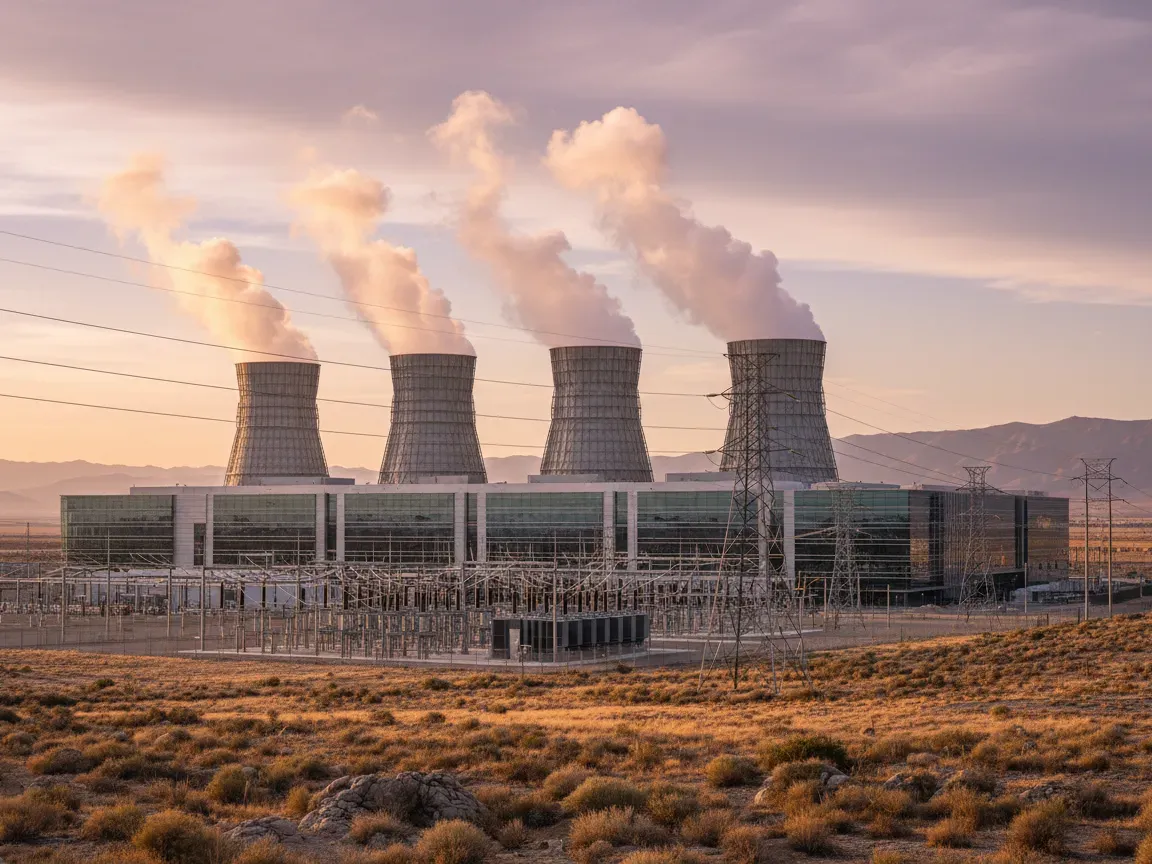
California is shifting the financial burden of artificial intelligence back onto the companies building it. Under a new legislative push, the state is requiring high-capacity data centers to pay for their own utility expansions, addressing mounting concerns over power grid strain and regional water supplies.
This policy shift marks one of the most aggressive state-level efforts to control the physical footprint of digital innovation.
California Takes the Lead in Regulating AI Infrastructure
As tech companies accelerate the deployment of large language models, the physical facilities supporting them are expanding at an unprecedented rate. High-density server racks require vast amounts of continuous electricity to process workloads and massive volumes of water for evaporative cooling systems.
California lawmakers have moved to prevent these industrial-scale operations from overwhelming civic systems. By establishing clear statutory limits, the state is treating large computational hubs not simply as commercial office space, but as heavy utility consumers that require dedicated oversight.
New Laws Target Escalating Power and Water Consumption
The legislative package includes seven distinct state laws designed to curb the environmental and logistical impact of rapid tech expansion. Rather than placing blanket limits on computation, the bills zero in on the physical inputs required to run modern hardware.
These statutes focus on several primary operational areas:
- Direct accounting of total megawatt consumption during peak grid hours.
- Mandatory disclosures regarding daily water withdrawal and consumption rates for cooling towers.
- Requirements for facilities to secure dedicated water supplies that do not disrupt municipal drinking water networks.
- Independent utility assessments prior to the approval of new construction permits.
By setting these boundaries into state statute, California is ensuring that the physical reality of running server farms does not compromise basic community resources.
How the CPUC Rate Class Shields Everyday Consumers?
A central component of this regulatory framework involves the California Public Utilities Commission, known as the CPUC. Lawmakers have directed the agency to establish a distinct rate class specifically tailored for high-capacity artificial intelligence facilities.
Historically, major electrical utility upgrades are rolled into the general rate base, meaning residential households and small businesses help shoulder the cost of transmission lines, substations, and generation capacity. Under the CPUC’s new structure:
- Data centers must be billed under a separate tariff reflecting the true marginal cost of their extreme demand.
- Capital expenditures required to connect massive facilities cannot be transferred onto residential utility bills.
- Households remain insulated from sudden electricity rate spikes driven by nearby tech campus expansions.
This financial firewall ensures that everyday consumers do not subsidize the immense power demands of venture-backed artificial intelligence ventures.
Tech Giants Face Mandatory Infrastructure Upgrade Costs
For companies building out infrastructure, the financial equation has changed significantly. In the past, regional utilities often absorbed or shared the cost of beefing up local substations to attract commercial tenants. Under the new laws, tech giants must directly fund their own grid and water infrastructure upgrades.
If an artificial intelligence operator plans to build a facility requiring hundreds of megawatts or millions of gallons of water, that operator must pay for the dedicated power substations, high-voltage lines, and specialized water treatment facilities needed to support it. This requirement removes the indirect public subsidies that historically helped accelerate rapid data center rollouts.
Environmental Safeguards Meet Rising Data Demands
The intersection of strict climate targets and soaring computing needs creates a complex operational landscape. California already operates under rigorous renewable energy goals, and the sudden influx of round-the-clock computational loads threatens to extend the lifespan of older, fossil-fueled backup generation if left unchecked.
Water scarcity adds another layer of urgency. Evaporative cooling remains one of the most cost-effective methods to prevent high-performance processors from overheating, but it consumes millions of gallons of freshwater in regions frequently plagued by drought. The state’s new regulations force developers to explore closed-loop liquid cooling, air cooling, or recycled non-potable water, balancing technological expansion against local resource conservation.
What These Regulations Mean for the Future of Generative AI?
The introduction of strict utility mandates creates immediate financial and operational hurdles for developers. Meeting these standards requires longer planning cycles, complex permitting reviews, and substantial capital outlays before a single server goes online.
As a result, tech enterprises are reassessing their regional deployment strategies:
- Facility timelines will stretch as operators negotiate specialized interconnect agreements with utilities.
- Capital expenditure models must account for full-cost infrastructure construction rather than standard hookup fees.
- Some developers may look to shift secondary training facilities to neighboring states with looser resource protections, while keeping latency-critical deployment hubs closer to California user bases.
These added burdens illustrate that the era of unconstrained physical growth for high-density computing is drawing to a close.
Balancing Technological Growth with Civic Stability
California’s decisive regulatory framework sets a clear precedent for how governments manage the physical impact of digital tools. By requiring tech enterprises to fund the infrastructure they strain, the state is defending local water security and protecting household utility budgets from runaway expansion costs.
For the technology industry, this shift demands a more mature approach to resource management. Companies can no longer treat electricity grids and public water lines as bottomless, inexpensive inputs. Growth strategies must now prioritize hardware efficiency, advanced cooling designs, and transparent local collaboration.
Other states facing similar data center booms are likely to adopt California’s model in the coming years. Developers that adapt early by designing self-sustaining, efficient facilities will navigate this evolving regulatory landscape far better than those relying on traditional utility subsidies.