
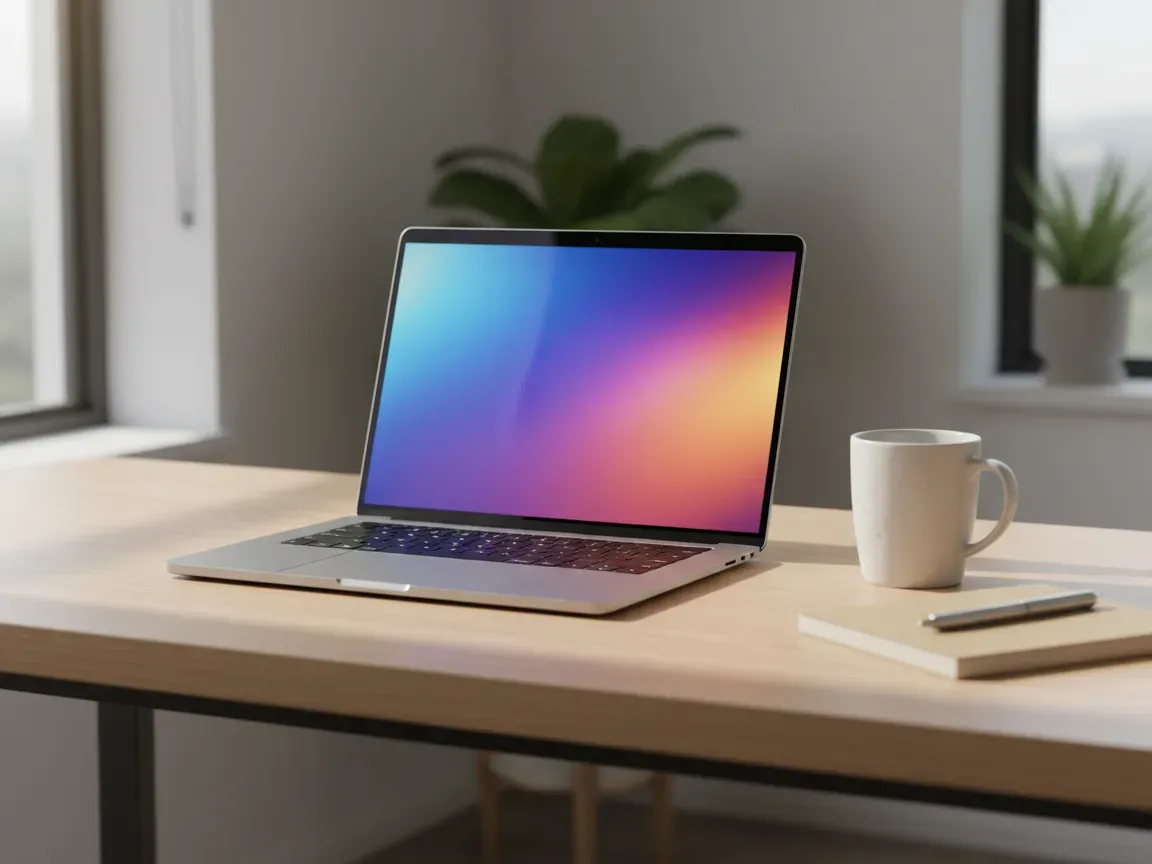
Google is officially taking a direct shot at the premium ultraportable market. The company has announced its brand-new Googlebook lineup, launching on October 4 with preorders opening today. Starting at $899, this release represents a decisive pivot away from cheap classroom portables toward luxury, high-performance hardware designed for power users and creative professionals.
Googlebook Lineup Debuts on October 4 Starting at $899
The October 4 launch date marks a significant transition for Google’s personal computing division. For years, the broader market associated the platform primarily with budget-friendly devices built for light web browsing and education. This new launch completely redefines that narrative.
By setting the entry-level price point at $899, Google is positioning the Googlebook directly against established market leaders. The strategy centers on delivering a full-fledged flagship laptop experience right out of the box. Rather than compromising on components to hit aggressive sub-$300 targets, the engineering focus here is on raw processing power, responsive multitasking, and high-end display fidelity. Preorders are already live through official retail channels, giving early adopters an opportunity to secure their units ahead of the general retail debut.
Five New Models Available for Preorder Today
To appeal to a wide variety of productivity needs, Google has structured the new family around five distinct configurations. Each tier addresses specific user demands, ranging from everyday mobile work to intensive on-device creative production.
- Googlebook Base: Features the entry-level processor, 8GB of unified memory, and 128GB of high-speed solid-state storage, serving as the lightweight entry point at $899.
- Googlebook Plus: Steps up to 16GB of RAM and 256GB of storage, tailored for everyday multitasking and power-heavy tab management in modern web apps.
- Googlebook Pro 14: Introduces a higher-tier processor, a calibrated high-refresh-rate display panel, and 512GB of internal storage for demanding mobile professionals.
- Googlebook Pro 16: Expands the screen real estate to a roomy 16-inch chassis, paired with enhanced thermal headroom and expanded battery capacity for extended desk-free work.
- Googlebook Ultra: Serves as the top-tier configuration, loaded with maximum memory options, 1TB of storage, and advanced graphics performance for compiling code and editing high-resolution media.
This clear five-tier lineup lets shoppers match their hardware budget directly to their workflow without navigating endless custom component menus.
Premium Build Quality and Industrial Design Upgrades
The physical construction of the Googlebook family reflects its upscale price tag. Every model uses a CNC-machined aluminum chassis that resists flex, keeping the overall profile slender without feeling fragile. Google opted for clean, minimalist industrial lines, rounded edges, and a fingerprint-resistant matte surface finish.
Attention to detail extends to the input surfaces. The keyboard utilizes a refined scissor-switch mechanism that offers crisp tactile feedback with decent key travel, making long typing sessions comfortable. Below the keys sits an oversized haptic glass trackpad that provides smooth gesture navigation across the operating system. Combined with edge-to-edge displays with minimal bezel waste, these machines look and feel like true modern luxury portables.
Deep Smartphone Ecosystem Integration Across All Configurations
Hardware design is only half of the story here. A major selling point across all five configurations is the instant, deep integration with modern smartphones. Google has tightened the link between personal mobile devices and the desktop environment to reduce everyday friction.
Pairing your phone with any of the new laptops enables instant tethering, eliminating manual hotspot configuration whenever you step away from known Wi-Fi networks. Text messages, chat apps, and mobile notifications populate directly into a centralized notification shade on the laptop screen. Users can stream mobile apps natively in floating windows, copy text on a phone and paste it directly onto the laptop clipboard, and transfer high-resolution photos and documents in seconds with wireless proximity sharing.
How Does the Pricing Compare to Flagship Rivals?
Entering the $899 to $1,500-plus territory puts the Googlebook in direct competition with the most respected ultraportables in the industry. It squares off against popular alternatives like the MacBook Air, Dell XPS 13, and Microsoft Surface Laptop.
For shoppers accustomed to paying low prices for ChromeOS-based hardware, an $899 floor might cause immediate sticker shock. However, against traditional flagship laptops, Google has priced these machines aggressively. While competing base models often charge steep premiums for storage and RAM upgrades, Google keeps its tier jumps relatively balanced. The real challenge will be convincing longtime Windows and macOS users that the software environment provides enough specialized desktop utility to justify matching hardware investments.
Is Google’s High-End Pivot Worth the Investment?
Determining whether the new Googlebook lineup makes sense for you depends on where your work actually happens. If your daily routine revolves around native enterprise software suites or heavy local rendering pipelines, traditional platforms might still hold an edge.
For the vast majority of modern knowledge workers, researchers, and writers whose daily productivity lives inside modern cloud workflows, progressive web apps, and connected services, the Googlebook presents a compelling case. The hardware compromises of previous generations are gone, replaced by exceptional displays, responsive trackpads, and all-day battery life.
Navigating the Shift Toward Modern Premium Hardware
The new Googlebook lineup proves that Google is no longer content playing exclusively in the value segment. By pairing high-grade industrial materials with seamless mobile connectivity, the company has built a family of portables capable of holding their own against any premium ultrabook currently on store shelves.
Buyers who previously dismissed the platform due to plastic enclosures or sluggish budget chips now have a reason to reconsider. If you prioritize fast boot times, effortless cross-device continuity, and sleek aluminum hardware, this five-model lineup offers a focused alternative to conventional laptops. The shift toward premium pricing is bold, but for users ready to embrace cloud-centric productivity without sacrificing build quality, the upgrade path is clearer than ever.