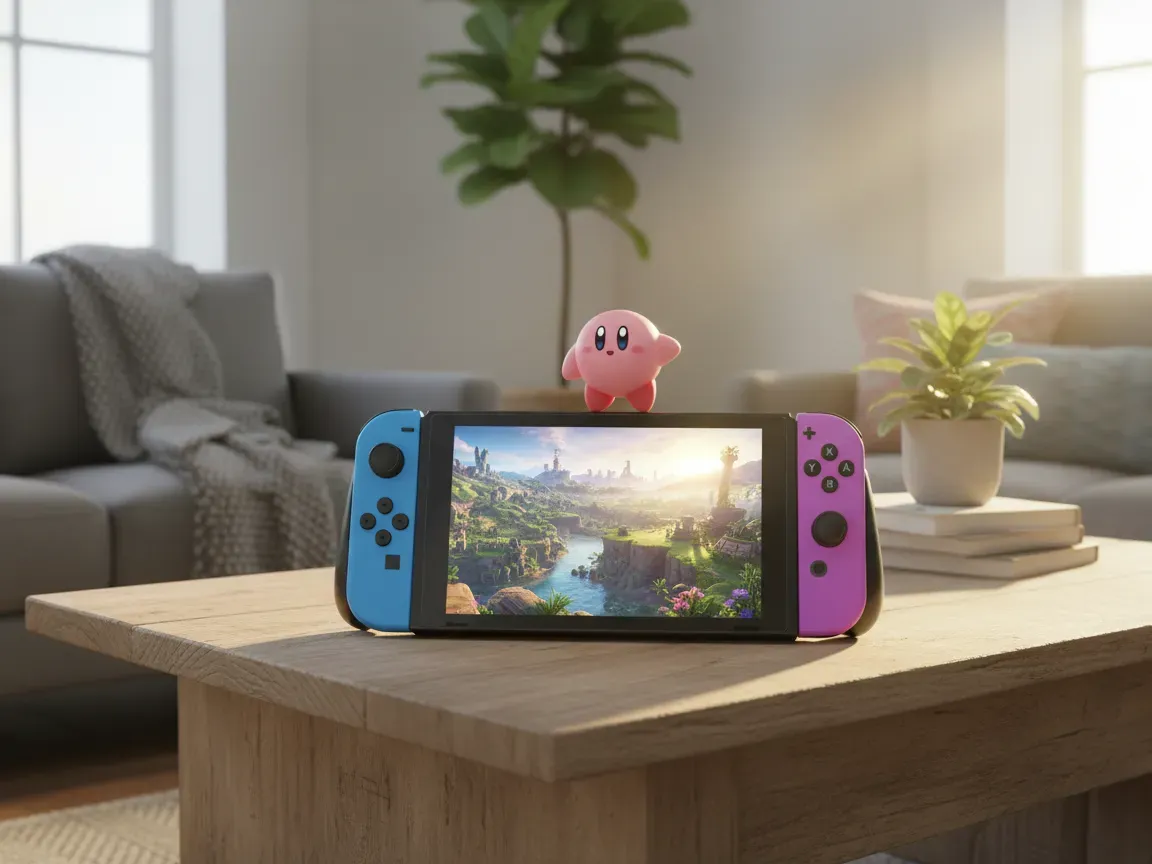
Nintendo has officially revealed the next major chapter for its iconic pink hero. During the latest Nintendo Direct presentation, the company announced Kirby and the World Beyond, marking the fourteenth mainline installment in the long-running platforming series. This upcoming entry aims to push the franchise into uncharted territory, leaving behind familiar environments for a completely fresh adventure built from the ground up for next-generation hardware.
The reveal confirms months of community speculation about where developer HAL Laboratory would take the character following recent experimental releases. Rather than sticking purely to linear platform stages, the upcoming title plans to redefine how players navigate and interact with Kirby’s universe.
Nintendo Unveils Kirby and the World Beyond
The announcement trailer showcased during the Direct gave fans their first official look at the project. Serving as the fourteenth core entry, Kirby and the World Beyond represents an ambitious milestone for Nintendo and HAL Laboratory. The presentation highlighted a noticeably upgraded visual direction, dynamic lighting, and environmental scale that far exceeds previous entries on existing hardware.
Longtime followers of the franchise quickly noticed the shift in tone and scope. While retaining the whimsical charm, bright color palette, and approachable character designs that define the series, the footage made it clear that the development team is building something substantially larger than a traditional sequel.
A Bold Leap into Open-World Exploration
The defining feature of Kirby and the World Beyond is its shift toward expansive, open-world gameplay. For decades, Kirby titles relied heavily on side-scrolling mechanics and segmented stage designs. Even recent three-dimensional entries kept progression tied to carefully contained levels with clear start and finish points.
This new adventure breaks traditional boundaries by dropping players into a vast, interconnected setting located outside Kirby’s usual universe:
- Seamless exploration across massive terrain without traditional stage transitions
- Freedom to approach objectives, puzzles, and encounters from multiple angles
- A completely foreign realm featuring environments never before seen on Planet Popstar
- New ways to utilize signature copy abilities across wider, vertical landscapes
By stepping outside the established boundaries of Dream Land, the game challenges players to adapt Kirby’s traversal tools, floating mechanics, and combat powers to a much broader scale. The transition into an open environment gives the classic move set room to breathe, encouraging organic discovery rather than guided progression.
Next-Gen Hardware: Arriving on Nintendo Switch 2
A scope this large requires more horsepower than the current Nintendo Switch can provide. Nintendo confirmed that Kirby and the World Beyond is developed specifically for the upcoming Nintendo Switch 2. Building exclusively for the next-generation platform allows the team to render expansive vistas, maintain smooth performance, and eliminate aggressive loading screens between zones.
The decision to target the successor console reflects Nintendo’s strategy of pairing flagship intellectual properties with hardware transitions. While previous entries pushed the original Switch to its technical limits, the extra memory and processing capabilities of the Switch 2 give developers the freedom to maintain steady frame rates while simulating interactive open ecosystems. For players, this means denser worlds, better draw distances, and seamless exploration.
Spring 2027 Release Window and 35th Anniversary Speculation
Kirby and the World Beyond is currently slated for release in Spring 2027. While Nintendo has not locked down a specific day on the calendar, industry observers and fans point toward a very clear target date: April 27, 2027.
That exact date marks the official 35th anniversary of the franchise, commemorating the Japanese debut of Kirby’s Dream Land on the original Game Boy in 1992. Launching the fourteenth mainline game alongside such a major historical milestone provides a natural celebration for the character’s legacy.
With several years of development still ahead, Nintendo is positioning the title as a cornerstone release for the Nintendo Switch 2 ecosystem. Moving the pink puffball into a massive open world outside his comfort zone shows that even after three and a half decades, the franchise still has plenty of room to evolve.