
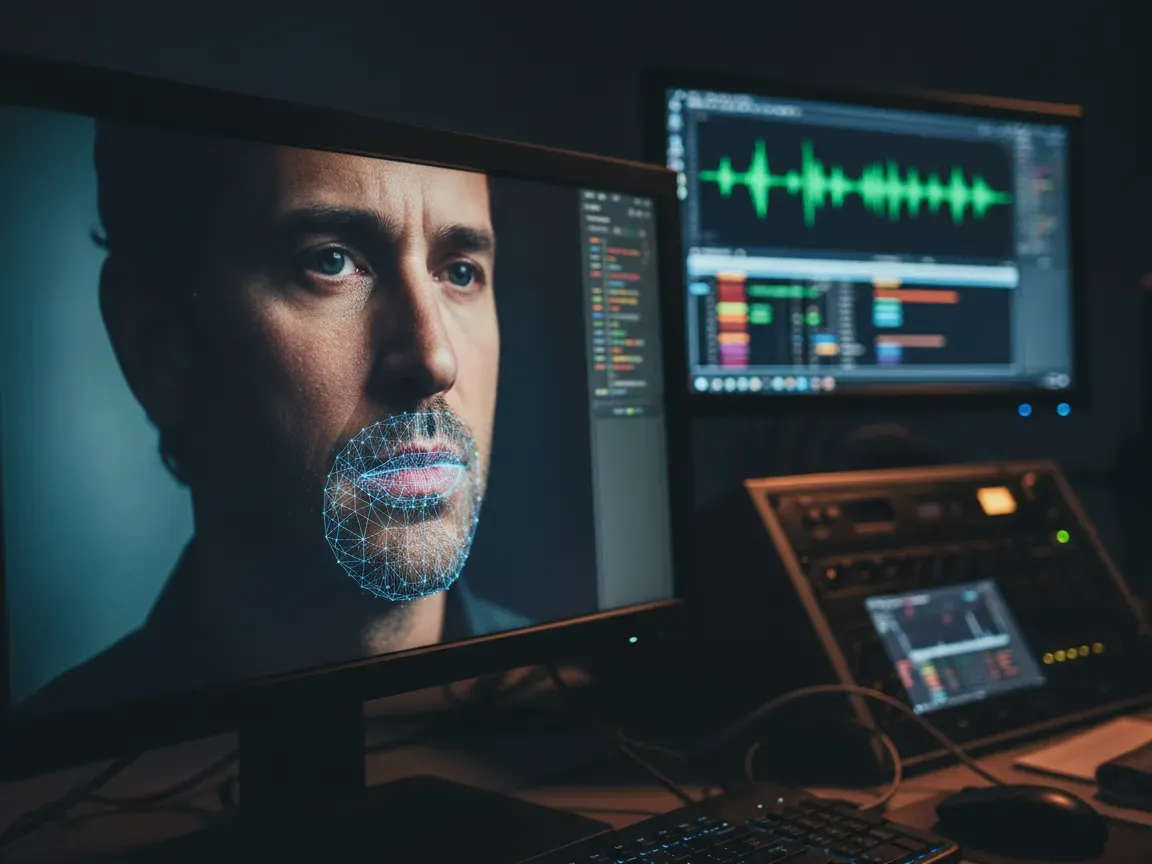
Amazon Prime Video is taking a massive leap forward in content localization by tackling one of the oldest frustrations in television: poorly synced dubbed dialogue. Using advanced artificial intelligence, the streaming platform has developed a tool that alters the visual movement of an actor’s mouth to match translated audio tracks. Instead of forcing voice actors to squeeze translations into unnatural rhythms, the system uses visual generative technology to reshape the original performance around the new language.
This subtle adjustment removes the uncanny distraction that has plagued foreign-language entertainment for decades, offering viewers an experience that looks and feels native.
How Prime Video Uses AI to Fix Lip-Syncing
Traditional dubbing is a delicate compromise. Translators and voice actors often rewrite dialogue simply to fit the physical syllable counts and visible lip flaps of the original performance. When that compromise fails, the resulting mismatch pulls the audience out of the story.
Prime Video approaches the problem from the visual side rather than just the audio track. The platform uses AI visual effects models to analyze the target language’s phonemes and modify the actor’s lips, jawline, and lower facial movements in the video itself.
- The technology analyzes the translated audio waveform to determine exact phonetic timings.
- Neural networks generate synthetic facial adjustments that blend into the actor’s real face frame by frame.
- Lighting, skin texture, and natural facial tics remain consistent with the original high-definition footage.
- The rest of the actor’s emotional performance, including eyes and upper face gestures, stays untouched.
By modifying the visual feed to match natural dubbing, voice actors can focus on authentic emotional delivery rather than robotic timing. The end result minimizes the visual friction that often drives casual viewers away from non-English programming.
Maxton Hall: The First Test for Seamless AI Dubbing
To prove the commercial viability of this visual tool, Amazon chose its global breakout hit, the German romantic drama Maxton Hall - The World Between Us. The series rapidly became one of the most-watched non-English original titles on Prime Video, making it the ideal proving ground for next-generation localization.
The AI dubbing deployment on Maxton Hall follows a strategic rollout:
- The English dubbed version of season one has been retrofitted with the new AI visual sync technology to improve its existing catalog value.
- Season two will incorporate the visual modifications directly into its English audio stream upon release.
- Production and localization pipelines for the upcoming season three are already being organized to implement this technology straight from the post-production stage.
Applying the system to a high-profile romantic drama is a calculated move. Close-up shots and emotional dialogue make discrepancies between speech and lip movements far more noticeable than in fast-paced action sequences. If the system succeeds in convincing audiences during intimate conversations, it can handle virtually any genre in Amazon’s catalog.
The Streaming Arms Race for Next-Gen Localization
Amazon is far from the only tech powerhouse attempting to solve the language barrier through generative AI. The launch of this visual lip-sync tool places Prime Video directly in competition with major platforms like Meta and YouTube, both of which are aggressively investing in automated translation and audio-visual synchronization.
YouTube has been piloting AI-powered multi-language audio tracks and synthetic voice translation to help creators scale their channels worldwide without hiring expensive external dubbing studios. Meta continues to develop end-to-end translation models that combine speech translation, tone cloning, and real-time lip movement adjustments for social video and virtual reality environments.
Amazon’s approach distinguishes itself by focusing heavily on premium visual realism for scripted cinematic streaming. Rather than just cloning an actor’s voice or generating robotic translations, Prime Video is treating localization as a post-production visual effect.
As global streaming growth increasingly relies on international productions finding massive audiences abroad, the ability to eliminate language friction gives platforms a decisive competitive edge. Amazon’s integration of AI visual sync into shows like Maxton Hall suggests that the dividing line between local content and global blockbusters is about to disappear entirely.