
Related Tags
When prolonged heat and drought turn your yard into a patchy, yellow expanse, the instinctive reaction is often to dump a bag of quick-release fertilizer on it. That is one of the most destructive mistakes you can make. Pushing rapid top growth on grass with a damaged, dehydrated root system burns tender crowns and exhausts the plant’s remaining reserves.
Real lawn recovery does not come from a bag of nitrogen. It starts with mechanical restoration, specifically scarification, to clear dead organic barriers and allow moisture to reach the root zone again.
What Drought Does to Soil and Grass
Extended periods without rain trigger survival mechanisms in turfgrass. Cool-season grasses enter summer dormancy, browning out to conserve water. While dormant grass can survive several weeks without moisture, prolonged drought kills off root mass and leaves a thick layer of dead vegetative tissue at the soil line.
The soil itself suffers just as much:
- Hydrophobic crusting: Dehydrated topsoil shrinks and forms a hard surface layer that repels water instead of absorbing it.
- Root dieback: Shallow root networks dry out completely, leaving only deep taproots alive.
- Compaction: Hardened ground restricts the natural exchange of oxygen, carbon dioxide, and microbial activity.
Reviving a damaged yard, often referred to in seasonal care plans as trawnik po suszy, requires addressing these structural soil problems before forcing any new growth.
Why Nitrogen Fertilizer Makes Drought Damage Worse
Nitrogen drives vegetative shoot growth. When you apply high-nitrogen products to drought-stressed turf, the plant is forced to expend its remaining energy producing new green leaves instead of rebuilding its root system.
Because the roots cannot take up enough water to support this rapid leaf expansion, the new shoots quickly wither and die. Additionally, synthetic fertilizers contain mineral salts. In dry or semi-dry soil, these salts draw residual moisture away from plant cells, causing severe fertilizer burn. If you want your turf to bounce back, put the fertilizer spreader away until the grass is actively growing and fully hydrated.
Why Scarification Is the True First Step
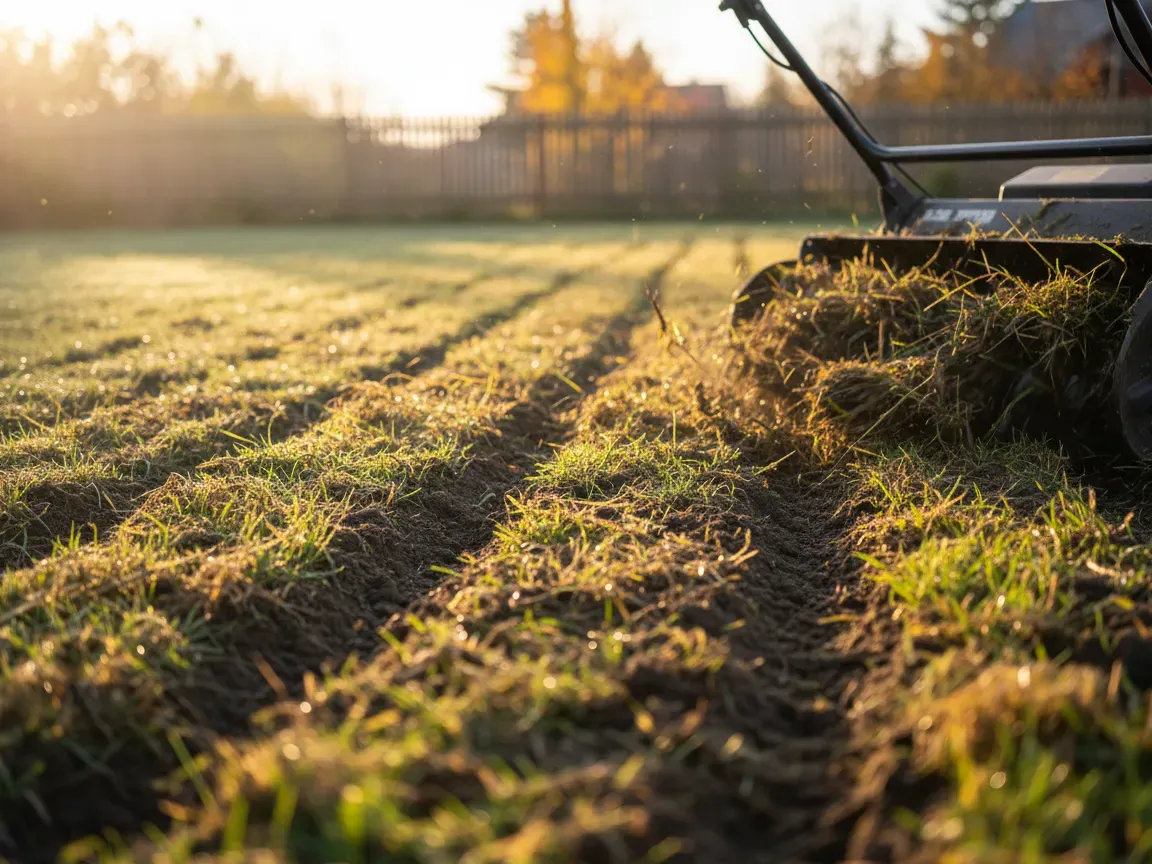
Scarification, also known as verticulation or dethatching, involves running vertical blades through the turf canopy to slice through surface debris. During a drought, grass sheds blades rapidly, creating a dense layer of thatch mixed with dried moss.
This thatch layer functions like a sponge, soaking up light rains before a single drop reaches the soil. Slicing through this barrier provides essential benefits:
- Removes dead matter that harbors fungal pathogens during humid late-summer days.
- Creates clean furrows in the soil, allowing water, air, and overseeded grass seeds to make direct contact with the earth.
- Prunes root rhizomes, which stimulates healthy lateral growth once growing conditions improve.
Step-by-Step Restoration: Timing, Aeration, and Scarification
Timing is critical. Never scarify a lawn while the soil is bone-dry or under intense heat, as the mechanical stress can pull out surviving crowns.
1. Rehydrate the Lawn First
Wait for temperatures to drop in late summer or early fall. If rain is scarce, water deeply two to three days before working on the lawn so the soil is moist but not muddy.
2. Mow Low
Cut the grass down to approximately 1.5 inches. Lowering the height makes it easier for the scarifier blades to reach the thatch layer without tearing green blades unnecessarily.
3. Aerate Heavily Compacted Areas
If your soil is hard-packed clay, run a core aerator over the lawn before or after scarifying. Pulling soil plugs relieves compaction and creates pathways for deep water infiltration.
4. Scarify in Two Directions
Set your machine to penetrate only a fraction of an inch (1 to 3 millimeters) into the soil. Make one pass across the lawn, rake up the accumulated debris, and make a second pass at a 45-degree angle to catch remaining thatch.
Reseeding and Rehydration Techniques
Once the ground is cleared of debris, bare spots will be exposed. Overseed immediately with high-quality grass seed suited to your climate and sun exposure.
- Seed-to-soil contact: Lightly rake the seed into the grooves left by the scarifier, or cover with a thin dusting of compost (no more than a quarter-inch).
- Watering schedule: Switch from deep, infrequent watering to light, daily misting until the seeds germinate. Keep the top layer of soil continuously damp for the first two weeks.
- Gentle feeding: If you must apply nutrients, use an organic starter fertilizer high in phosphorus to encourage root anchoring, not top growth.
Building Long-Term Drought Resilience
Preventing future drought damage comes down to sustainable management practices. Raising your mower height to three or four inches during hot months shades the soil, keeping it cooler and reducing evaporation.
When you do fertilize in the fall, choose formulas rich in potassium rather than excessive nitrogen. Potassium strengthens cell walls, improves drought tolerance, and prepares your turf to survive extreme weather shifts without collapsing.