Lighting is the quiet workhorse of interior design. Get it right and a room feels considered, layered and calm. Get it wrong and even the most beautiful furniture falls flat under a single harsh ceiling light. The tool that has changed this conversation for architects, designers and homeowners alike is the aluminium LED profile: a slim channel that houses an LED strip, hides the diodes and throws clean, even light exactly where you want it.
If you have admired the seamless glow tucked under a kitchen cabinet, the ribbon of light running up a staircase or the soft halo behind a bathroom mirror, you have already seen a led profile light at work. Below is a room-by-room guide to using them well, whether you are planning a full renovation or simply want to upgrade the atmosphere of a single space.
Why aluminium led profiles belong in every interior
Before the individual rooms, it helps to understand what a profile actually does. A raw LED strip on its own looks cheap. You see the individual dots, the adhesive backing peels over time and the light is uneven. Slot that same strip into an aluminium channel with a frosted diffuser and everything changes. The dots blend into a continuous line of light, the aluminium draws heat away so the LEDs last longer, and the whole fixture reads as an intentional architectural detail rather than an afterthought.
Profiles come in a wide range of mounting styles, so there is a version for almost any surface:
-
Surface-mounted profiles: that fix directly onto cabinets, walls or ceilings
-
Recessed profiles that sit flush for a clean, built-in line of light
-
Corner profiles angled at 45 degrees, ideal for under-cabinet task lighting
-
Plaster-in profiles that vanish into the wall with no visible frame
-
Pendant and suspended profiles for linear light over tables and islands
Pair that flexibility with the energy efficiency of modern LEDs and you have a lighting solution that is as kind to your electricity bill as it is to your interiors. A well-chosen profile becomes part of the architecture itself, not just a fitting bolted onto it.
Good lighting design is not about how many fittings you can see. It is about the light you feel and the source you never notice.
Bright, shadow-free task lighting for the kitchen
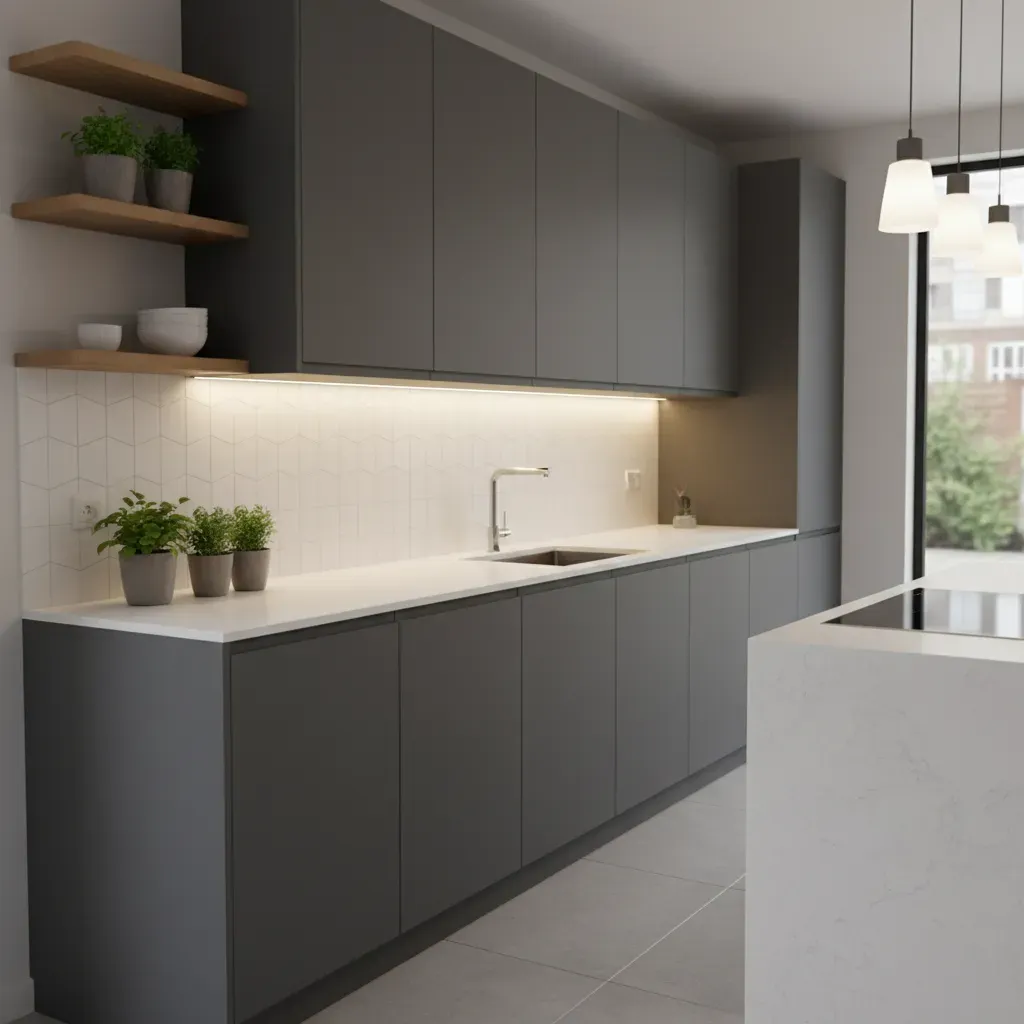
The kitchen is where LED profiles earn their reputation, and for good reason. Under-cabinet lighting is the classic starting point. A surface-mounted or angled corner profile fixed to the underside of your wall units washes light straight down onto the worktop, eliminating the shadows your own body casts when you stand at the counter. It is a genuine functional upgrade, not just a decorative one.
From there, the ideas open up. Run a recessed profile along the toe-kick at the base of your cabinets for a floating effect that makes the whole run of units feel lighter. Line the inside of open shelving or glass-fronted cabinets to turn everyday crockery into a display. For islands and breakfast bars, a warm strip tucked under the overhang adds a gentle glow that softens the transition into an open-plan living space. Choose a warm white around 2700K to 3000K here, since kitchens double as social spaces and cooler light can feel clinical.
Building layered, ambient light in the living room
The living room is all about layers, and profiles let you build them without cluttering the ceiling with downlights. The most